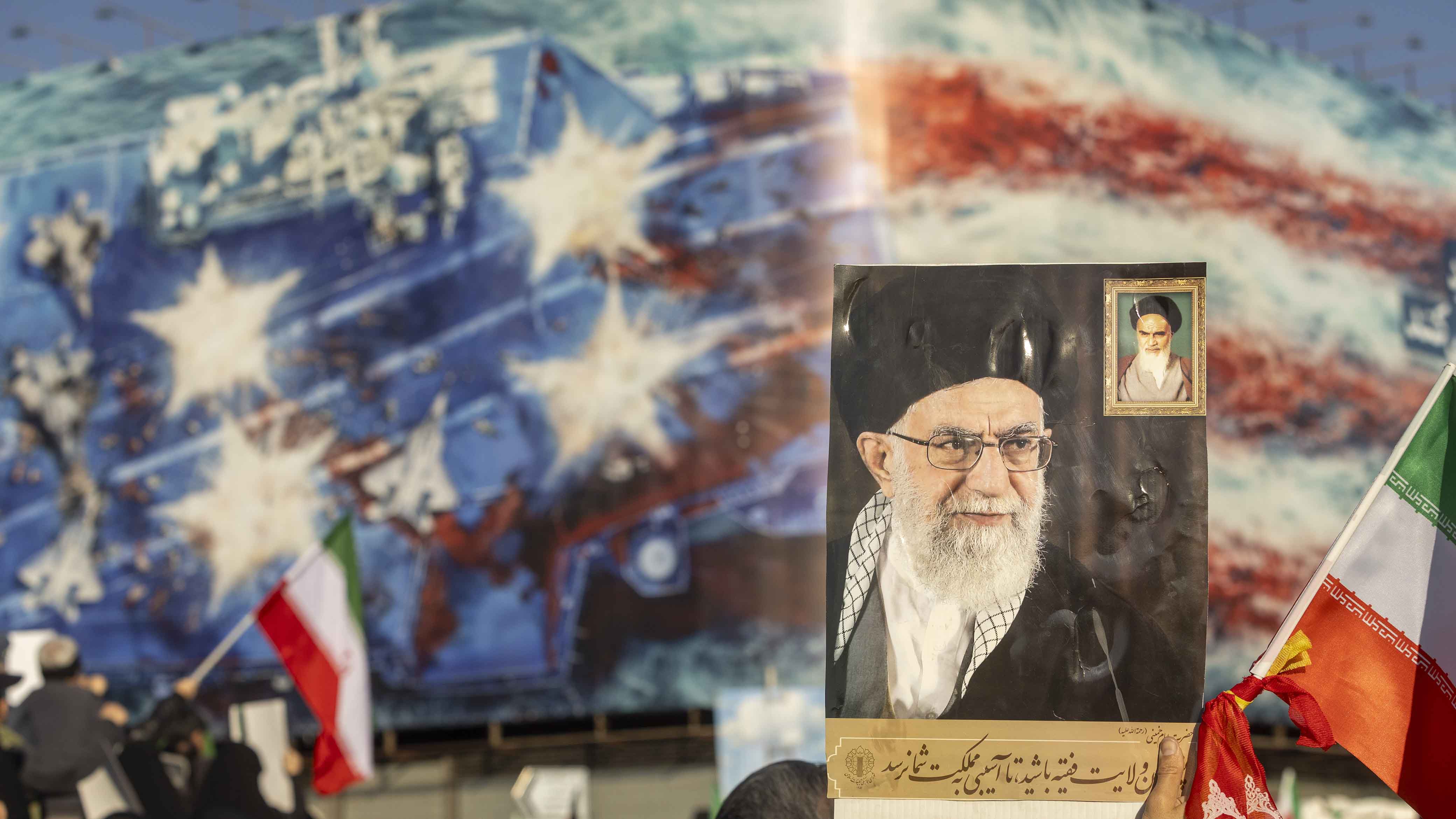
US-Israel Strikes Decapitate Iran Leadership: Key Takeaways from an Unprecedented Attack
In a stunning and audacious display of strategic military power, the United States and Israel launched a coordinated series of strikes across Iran, effectively managing to take out Iran leadership, including its long-standing Supreme Leader, Ayatollah Ali Khamenei. This unprecedented daytime assault on Saturday marked a seismic shift in Middle Eastern geopolitics, sending shockwaves far beyond the region. The operation, codenamed "Epic Fury," targeted hundreds of critical military and command-and-control sites, fundamentally altering the landscape of Iranian governance and regional power dynamics.
The swiftness and precision of the attacks, which saw the demise of Ayatollah Khamenei—a figure widely regarded as one of history's most malevolent—have been hailed by some as a triumph of justice and a potential catalyst for internal change within Iran. As President Donald Trump declared on Truth Social, this outcome represents "not only Justice for the people of Iran, but for all Great Americans," adding that it presents "the single greatest chance for the Iranian people to take back their country." The implications of this dramatic event are vast, heralding a period of intense uncertainty and potential transformation for Iran and its neighbors.
Operation Epic Fury: Unprecedented Precision and Scope
The joint US-Israeli offensive commenced in the early hours of Saturday, around 1:15 a.m. Eastern, unleashing a multi-pronged assault designed to cripple Iran's military infrastructure and take out Iran leadership at its highest echelons. US warships initiated the barrage with Tomahawk cruise missiles, quickly followed by US Navy and Air Force jets deploying air-launched missiles against a myriad of Iranian installations. The scale of the operation was immense, showcasing a meticulously compiled target list that spanned from surface missile launch locations to vital Islamic Revolutionary Guard Corps (IRGC) command and control centers.
The Israel Defense Forces (IDF) played a crucial role, contributing over 200 Israeli jets that dropped hundreds of munitions on more than 500 targets. While the Pentagon has remained largely tight-lipped about the specifics of US involvement, including the exact number of jets deployed or targets struck by American forces, the sheer coordination and comprehensive nature of "Epic Fury" underscored a profound commitment to neutralizing key threats posed by the Iranian regime. The strategic objective was clear: to dismantle Iran's capacity for military projection and, most significantly, to remove its highest authority, a move unprecedented in recent history for its direct state assassination of a world leader.
Iran's Swift Retaliation: A Volatile Response
In the immediate aftermath of the initial strikes that sought to take out Iran leadership, Iran launched broad retaliatory attacks. These counter-strikes targeted not only Israel but also a range of US military sites across the region, including installations in Bahrain, Jordan, Kuwait, Qatar, and the United Arab Emirates. The Iranian response involved a combination of ballistic missiles and the infamous one-way, explosive-laden Shahed attack drones, whose effectiveness and proliferation have been a growing concern for regional security.
Footage verified by The Washington Post and analyses by organizations like the American Enterprise Institute’s Critical Threats Project and the Institute for the Study of War documented these retaliatory efforts. Key targets included the Ali al-Salem air base in Kuwait, where missiles were reportedly intercepted, and an air base in Erbil, Iraq, which houses US troops and serves as a crucial operational hub. Despite these extensive counter-attacks, US Central Command confirmed that no US service members were injured or killed, and no US warships were hit. Notably, the US also unveiled its own one-way attack drone, the Low-cost Unmanned Attack System (LUCAS), modeled after Iran's Shahed fleet, signaling a new dimension in drone warfare.
The Human Cost and Geopolitical Ramifications
While the strategic objective to take out Iran leadership was unequivocally met, the operation has not been without significant and tragic human costs. Reports from both sides have highlighted potential civilian casualties, painting a grim picture of the collateral damage associated with such large-scale military engagements. Iranian Foreign Minister Abbas Araghchi claimed that dozens of children were killed in an Israeli strike on a girls’ school in the Iranian city of Minab. Further, disturbing reports emerged of an attack on Gandhi hospital, impacting neonatal babies. Central Command spokesman Capt. Tim Hawkins stated that these grave allegations were being thoroughly examined, underscoring the complexities and moral dilemmas inherent in modern conflict.
Beyond Khamenei, the Israel Defense Forces confirmed the elimination of seven other senior Iranian officials, including the secretary of the Iranian Security Council, the commander of Iran’s Revolutionary Guard Corps, and the defense minister of Iran. This comprehensive targeting represents a clear intent to dismantle the existing power structure and capacity for military action. However, the "decapitation" strategy has sparked intense debate among experts regarding its long-term efficacy. As scholars convened in symposiums to discuss After Khamenei: Experts Weigh Iran's Decapitation Fallout, opinions diverged. While some argue that it could fracture the regime, others contend that such a direct assassination could inadvertently galvanize opposition and turn Khamenei into a martyr, potentially unleashing unforeseen and devastating consequences, including an escalating Iran's Retaliation & Civilian Toll: The Cost of Epic Fury.
The Future of Iranian Leadership: A Power Vacuum?
The removal of Ayatollah Ali Khamenei creates an unprecedented power vacuum at the pinnacle of Iran's theocratic and political structure. For decades, Khamenei served as the ultimate arbiter of all major decisions, from domestic policy to foreign affairs and military strategy. His death, therefore, goes far beyond the loss of an individual leader; it signifies the potential disruption of an entire system. Analysts are now closely watching for signs of internal power struggles among the remaining factions within the IRGC, the clerical establishment, and various political elites. Will a clear successor emerge swiftly, or will the void lead to prolonged instability and internal strife?
Moreover, the concept of Khamenei becoming a martyr could rally significant popular support against external interference, potentially solidifying the regime's base rather than weakening it. The challenge for any new leadership will be to maintain control amidst potential internal dissent, manage the aftermath of the strikes, and formulate a coherent response to the US and Israel. The immediate future for Iran could be characterized by heightened internal tensions, fragmented authority, and an increased propensity for both symbolic and tangible acts of defiance.
Navigating the New Middle East Landscape
The ramifications of Operation Epic Fury extend far beyond Iran's borders, reshaping the entire Middle East landscape. Regional powers, including Saudi Arabia, the UAE, and other Gulf states, will be closely observing developments, assessing their own security postures, and potentially recalibrating their alliances. For the United States, this decisive action marks a significant shift in its approach to Iran, moving from a strategy of sanctions and containment to direct military intervention aimed at leadership removal. This bold move will undoubtedly influence US foreign policy in the region for years to come, impacting diplomatic efforts, security agreements, and military deployments.
Internationally, the strikes have garnered mixed reactions, with some allies expressing support for the decisive action against a destabilizing force, while others voice concerns about potential escalation and the precedent set by a direct state assassination. The global community will be grappling with the implications for international law, sovereignty, and the future of conflict resolution. The coming months will be critical in determining whether this dramatic intervention leads to a more stable Middle East, or if it ignites a new, more volatile chapter of regional conflict.
In conclusion, the US-Israel strikes that managed to successfully take out Iran leadership, culminating in the death of Ayatollah Ali Khamenei, represent a watershed moment in contemporary geopolitics. While lauded by some as a necessary act of justice and a potential pathway to freedom for the Iranian people, the operation has also incurred a tragic civilian toll and ignited a furious retaliatory response from Tehran. The ultimate fallout from this unprecedented event—whether it leads to a fundamental transformation within Iran or ushers in a new era of regional instability—remains to be seen. What is clear is that the Middle East, and indeed the world, will be watching closely as a new chapter in Iranian history begins to unfold.